

Developing independence and agency in my students has been (still is) a challenge for me. How do we make sure our teaching practices set kids up to work on their own without constantly tugging on our sleeves, literally or metaphorically? Not only is this a life skill, it’s something we as educators need in order to support all our students’ varied needs.
When a team of upper grade teachers I work with shared that they were looking to tackle this challenge in their own classes, it was a chance to level up one of the strategies I’ve used before with a new tool. One of the changes I made in my practice was to use the wrap-up part of a lesson as an opportunity to help students solve problems on their own. You can read more about that here. For this lesson, we did that work at the beginning of writing time rather than at the end. Either way works.
Here’s how it went.
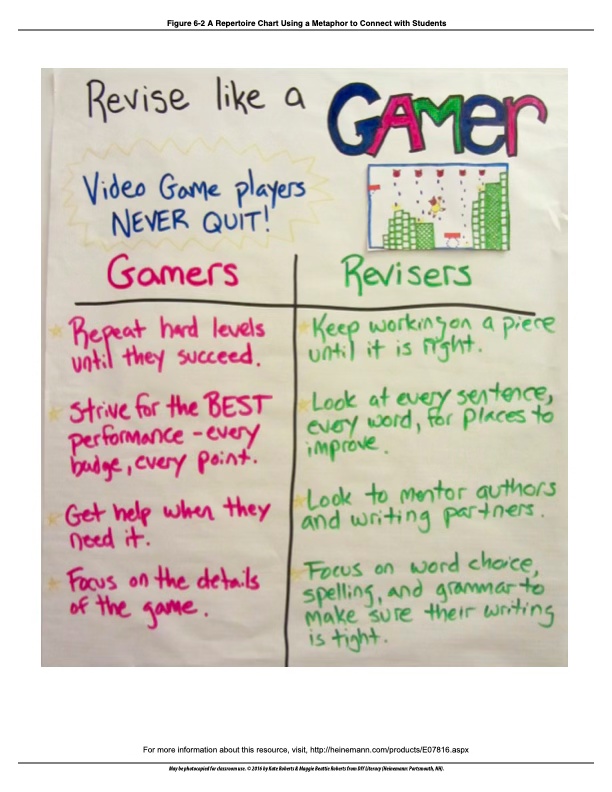
Inspired by a chart from DIY Literacy by Kate and Maggie Roberts, I asked the kids to think about what they do when they get stuck while playing video games, or any game really. I shared my experience with trying to play Among Us and immediately getting trapped in the first room. So awkward. They then shared the strategies they used with their partner. As I shared out what I heard them say, I added it to a T-chart. On the other side of the chart I added what the gaming strategy looks like for writers. This is what it looked like when we were done. (There’s a part of me that was dying to remake this chart to make it look prettier and fix the wording before sharing, but this is real life.)
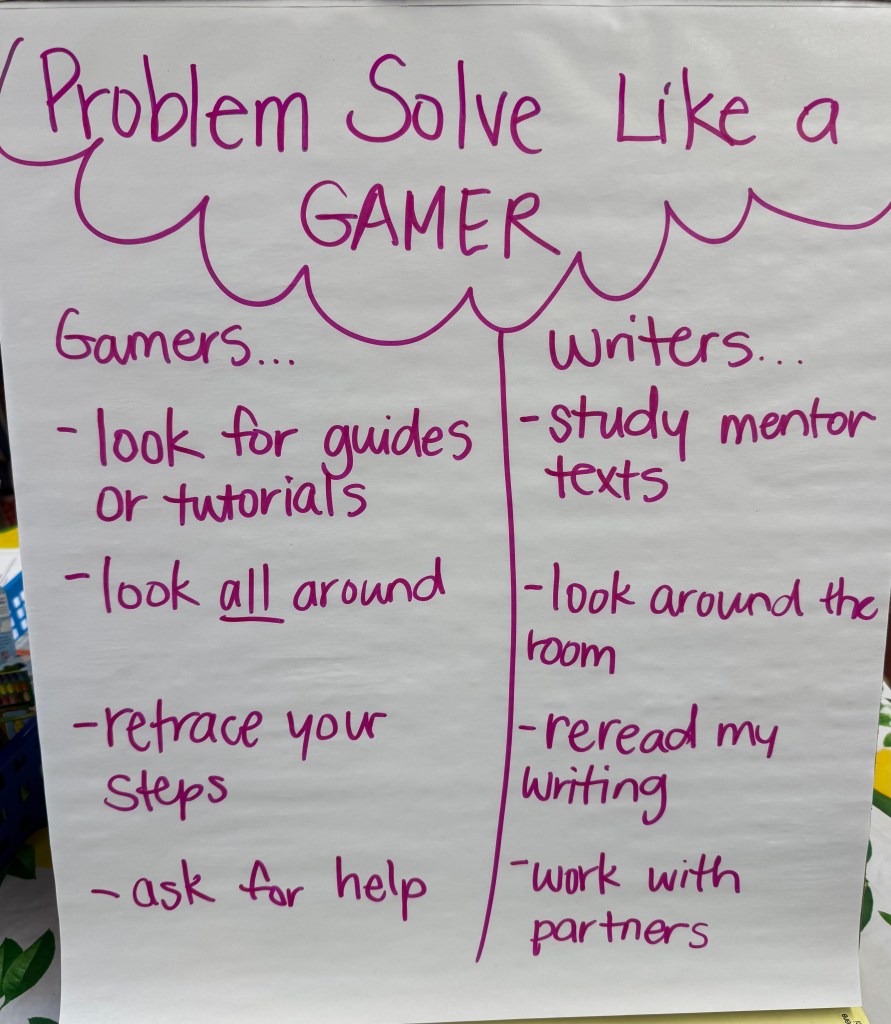
Before sending the kids off to work on their writing projects, they shared with their partner one more time: which strategy did they think they might lean on first if they got stuck? I then reminded them that they should get started and told them I was invoking a two-minute pause on any questions.
The results? Kids worked independently without interrupting, while the teachers and I conferred with individual students! While the lesson was a success that day, the kids will most likely need to revisit this chart over time. They may also need more specific strategies to get them unstuck. But for now, we’ve made it past the first round.
 Learn With Vivian
Leave a comment